
- مجمع عيادات شارع (9) - الهضبة العليا - المقطم - القاهرة
- +201099885538

Occupational Health and Safety in warehouses is an essential pillar for protecting workers, ensuring operational continuity, and safeguarding inventory and equipment. With constant forklift movement, high-density vertical rack storage, and fast-paced loading and unloading operations, neglecting safety procedures can quickly lead to severe injuries, physical damages, operational downtime, and financial loss.
Ensuring safe operations goes beyond merely installing fire extinguishers and posting warning signs. Achieving true safety in warehouses requires an integrated risk management framework—starting with safe aisle design and workflow layout, progressing to regular risk assessments and rack inspection, and culminating in comprehensive employee safety training.
In this article, we cover the core standards and procedures that foster a secure working environment, reduce accident hazards, and boost overall operational efficiency.
Adhering to HSE standards is vital for preserving human life, protecting business assets, and maintaining unbroken operations, particularly in environments handling heavy loads, mobile machinery, and elevated storage systems. Understanding the importance of safety in warehouses boils down to four main operational priorities:
We provide a complete range of storage solutions designed to protect workers and reduce workplace risks.
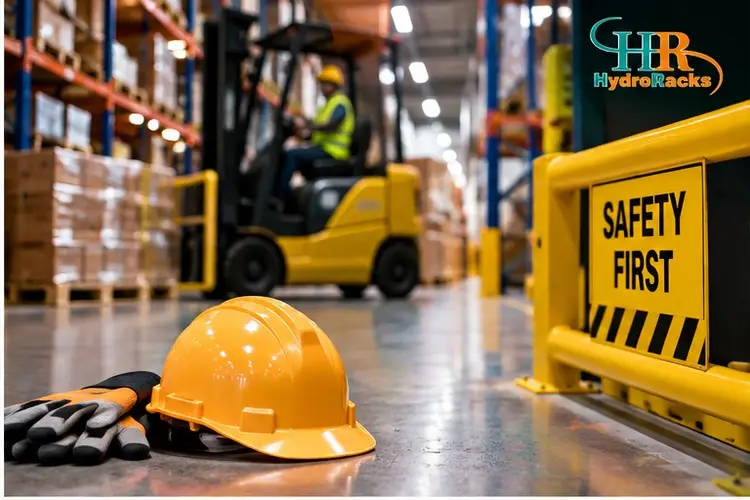
Warehouses present inherent operational risks due to heavy machinery interacting with pedestrians in shared spaces alongside high-level storage structures. Implementing proactive warehouse hazards and control measures is necessary to prevent incidents before they occur.
Pallet drops and falling items usually result from overloading racks, improper stacking, damaged pallets, or forklift impacts against structural columns.
Control Measures: Strictly adhere to maximum weight limits, inspect pallets before loading, secure loose items, and install column protectors or back-mesh safety netting.
Forklift hazards include speeding, blocked lines of sight from oversized loads, tip-overs caused by abrupt turns or uneven surfaces, and pedestrian collisions.
These everyday incidents stem from liquid leaks, discarded packaging materials, cluttered aisles, or poor lighting.
Fires can spread rapidly due to accumulated cardboard, plastic wrap, and wooden pallets, combined with electrical faults or improper battery charging practices.
Our solutions include reliable metal racks for warehouse storage and safety supplies for factories, warehouses, and industrial sites.
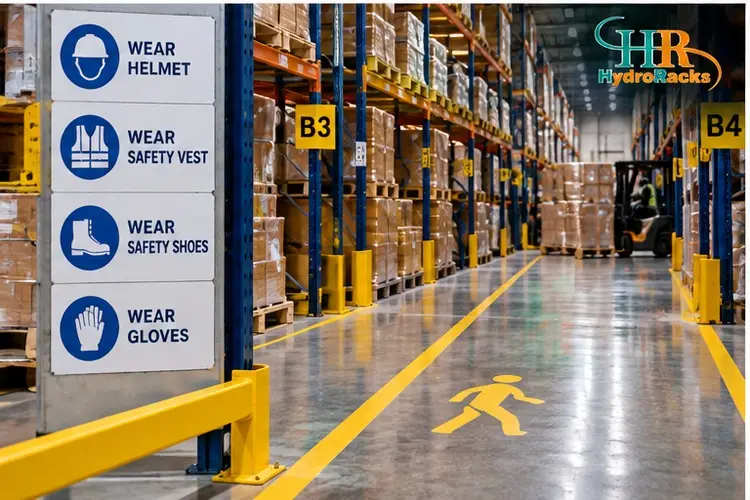
Securing a facility requires combining solid structural infrastructure with effective emergency suppression tools. Investing in reliable warehouse safety equipment forms the primary line of defense for protecting lives and property during unexpected emergencies.
Handheld and automated fire extinguishers provide immediate response capabilities during the early stages of a fire. Selecting the correct warehouse safety equipment depends on the stored inventory and specific risk areas:
Industrial storage facilities rely on robust water-based suppression systems to deliver continuous protection:
Storage racking forms the backbone of any logistics facility. Beyond maximizing vertical cube space, robust racking systems actively protect personnel and inventory from structural collapses. Selecting engineering-grade storage solutions represents a fundamental investment in operational security.
At Hydro Racks, we design and manufacture storage systems that combine exceptional durability with precise structural engineering, helping you maintain high safety in warehouses through:
To keep your storage structures in peak condition, integrating structural checks into your overall Warehouse safety checklist is vital. Always select racking systems based on load dimensions, total weight, and handling methods while enforcing regular inspection routines.
We offer high-quality warehouse racks safety products that help businesses maintain safer workplaces and improve overall protection standards.
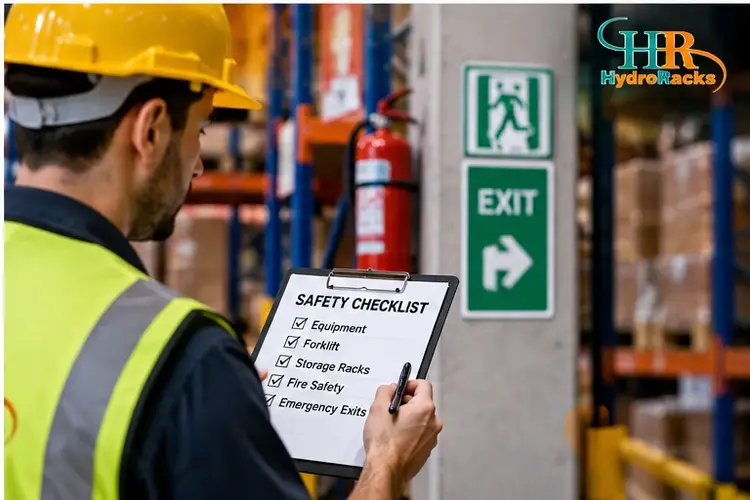
Even the most advanced facility needs trained personnel to execute emergency procedures efficiently during fires, chemical spills, or structural emergencies. Speed and clear coordination save lives.
Clear role assignment prevents chaos during an evacuation:
New hires should complete safety orientations covering exit routes and basic fire equipment operation—such as the PASS method (Pull, Aim, Squeeze, Sweep)—from day one. Conducting periodic emergency drills helps evaluate response times, identify bottleneck areas, and update emergency protocols to maintain full safety in warehouses.
Occupational Health and safety in warehouses standards form the groundwork for protecting personnel, preserving inventory, and maintaining continuous operational efficiency. Proactive risk management, forklift safety protocols, and proper load containment do more than satisfy regulatory compliance—they elevate productivity across the entire supply chain.
Securing your facility begins with strategic layout planning, regular emergency drills, and installing engineered racking solutions built for heavy operational demands. At Hydro Racks, we deliver tailored storage and racking systems designed to meet rigorous industrial demands, empowering you to build a safer, more organized, and highly efficient warehouse environment.