
- مجمع عيادات شارع (9) - الهضبة العليا - المقطم - القاهرة
- +201099885538

Imagine stepping into your villa or modern commercial facility and gliding effortlessly between floors with absolute silence, supreme comfort, and zero mechanical vibration. Vertical mobility is no longer a futuristic luxury—it is an essential architectural upgrade that redefines accessibility, enhances structural functionality, and drastically boosts property value. Whether you are designing a private residence or outfitting a multi-story commercial complex, understanding the true hydraulic elevator cost is the single most critical step in your project planning. As modern engineering continues to revolutionize building infrastructure, evaluating the technical parameters and financial variables of a Hydraulic Elevator Egypt project ensures you invest in a system built for safety, durability, and long-term efficiency.
This comprehensive guide breaks down the core factors driving the hydraulic elevator cost, explores technical mechanics, presents a complete home elevator price list, and demonstrates why Hydro-Racks (Taiba Company) stands as the premier engineering partner for elevator installation across Egypt.
Calculating the overall hydraulic elevator cost involves evaluating various engineering parameters, architectural constraints, and operational demands. Because every building layout is unique, the final hydraulic elevator price depends heavily on several technical specifications:
|
Cost Driving Factor |
Technical Impact & Price Influence |
|
Installation Environment |
Outdoor installations require heavy-duty weatherproof framing, UV glass, and thermal insulation compared to indoor shafts. |
|
Travel Height & Floors |
Higher structural travel increases hydraulic cylinder length, piston sizing, and the volume of hydraulic fluid needed. |
|
Cabin Capacity & Size |
Larger cabs accommodating heavy payloads require reinforced steel framing and high-torque hydraulic power units. |
|
Door Mechanisms & Controls |
Fully automatic sliding doors with infrared safety curtains increase convenience and overall investment value. |
|
Civil Preparation & Pit Depth |
Systems engineered for zero-pit or shallow-pit installation reduce expensive masonry and excavation overhead. |
If you would like to learn more about this topic and explore additional useful information, check out Manual electric forklift for important details that may interest you.
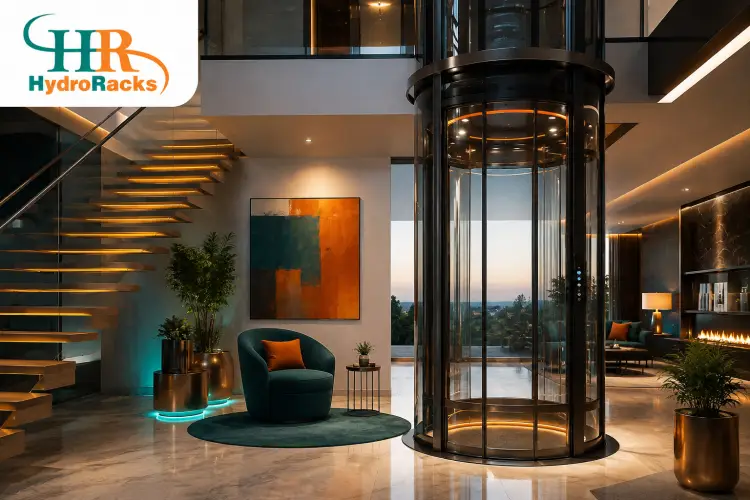
Installing an elevator inside an existing concrete shaft costs significantly less than an exterior panoramic installation. Outdoor units require reinforced structural steel cladding, specialized weatherproofing, UV-resistant glass, and thermal insulation to protect sensitive electronic components from ambient environmental factors.
The overall travel distance directly determines the length of the hydraulic cylinder, piston ram, and total fluid volume required. As structural height increases, the necessary hydraulic elevator cost scales up to accommodate larger drive units and extended hydraulic piping.
Standard residential cabs accommodating 2 to 3 passengers require smaller power units than commercial freight elevators built for 1,000+ kg loads. Furthermore, customized interior finishes—such as premium hairline stainless steel, panoramic tempered glass walls, and custom LED ceiling panels—directly impact overall cabin manufacturing expenses.
The complexity of the elevator control board, safety valve blocks, and door mechanisms influences total pricing. Fully automatic sliding doors featuring infrared safety curtains command a higher price than semi-automatic swing doors, but offer superior operational convenience and passenger safety.
Civil preparation overhead forms an integral part of the total project investment. Systems that require deep concrete pits (1.2 to 1.5 meters) incur higher site preparation expenses than advanced, low-pit or pitless hydraulic models designed for direct floor mounting.
When budgeting for your real estate project, reviewing a reliable home elevator price list allows you to balance architectural elegance with financial feasibility. Across the Egyptian market, a standard hydraulic elevator price ranges from EGP 100,000 for compact home lifts to upwards of EGP 800,000 or more for industrial-grade installations.
|
Lift Category |
Load Capacity |
Price Range (EGP) |
Primary Use Case |
|
Compact Home Lift |
200 – 300 kg |
EGP 100,000 – 250,000 |
Small private homes and duplexes |
|
Mid-Size Residential Lift |
400 – 500 kg |
EGP 250,000 – 450,000 |
Luxury villas and multi-story residences |
|
Heavy Commercial & Freight Lift |
1,000 – 2,500+ kg |
EGP 450,000 – 800,000+ |
Hospitals, factories, and commercial hubs |
(Note: These figures represent estimated market benchmarks. Final project quotes vary depending on component origin, custom cabin designs, currency shifts, and site preparation needs.)
For small duplexes and private homes, finding a low cost home elevator cost model that fits tight floor plans without requiring a traditional machine room is a top priority. Conversely, commercial developers evaluating a commercial elevator cost for 2-story building projects must budget for higher duty cycles, wider doors, and higher passenger weight capacities. If you are asking how much does a commercial elevator cost for a multi-story retail hub, factor in heavy-duty hydraulic pumps and continuous-duty oil cooling systems.
For more helpful information and a better understanding of the topic, you can read steel structure and explore the key details and useful tips related to it.
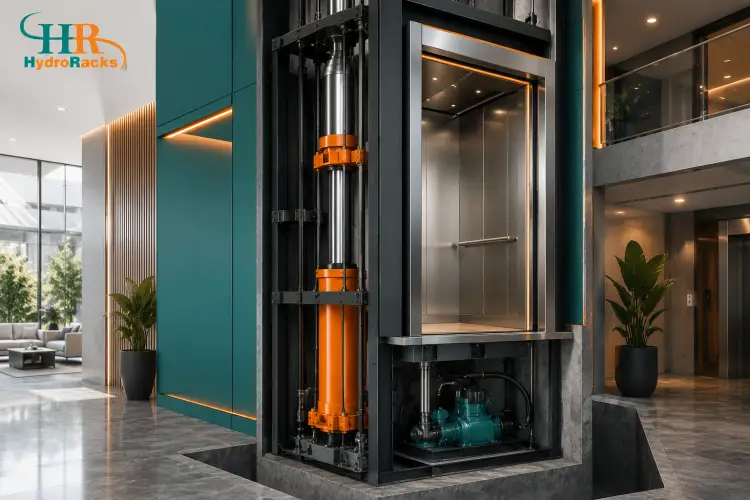
Unlike traction elevators that rely on overhead steel cables, counterweights, and heavy drive motors, a hydraulic system utilizes fluid pressure mechanics. An electric pump forces specialized hydraulic fluid into a heavy-duty steel cylinder, extending a solid piston ram that smoothly pushes the elevator cabin upward.
|
Comparison Feature |
Hydraulic Elevator Systems |
Electric Traction Systems |
|
Drive Mechanism |
Fluid pressure, piston ram, and pump unit |
Overhead electric motor, cables, and counterweight |
|
Overhead Machine Room |
Not required (uses compact remote cabinet) |
Required directly above shaft (or complex MRL clearance) |
|
Ideal Application |
Low-to-mid rise buildings (1 to 6 floors) |
High-rise towers and skyscrapers |
|
Power Outage Safety |
Automatic gravity descent to ground floor |
Requires complex automatic rescue devices (ARD) |
|
Energy Consumption |
Consumes power primarily during ascent |
Consumes power during both ascent and descent |
Choosing a hydraulic elevator offers distinct architectural benefits, especially for low-to-medium-rise structures up to 6 floors. Balancing these advantages against site considerations helps buyers achieve the best hydraulic elevator cost ratio for their investment.
You can also explore Overhead crane to discover more useful information and details that may help you find the right options for your needs.
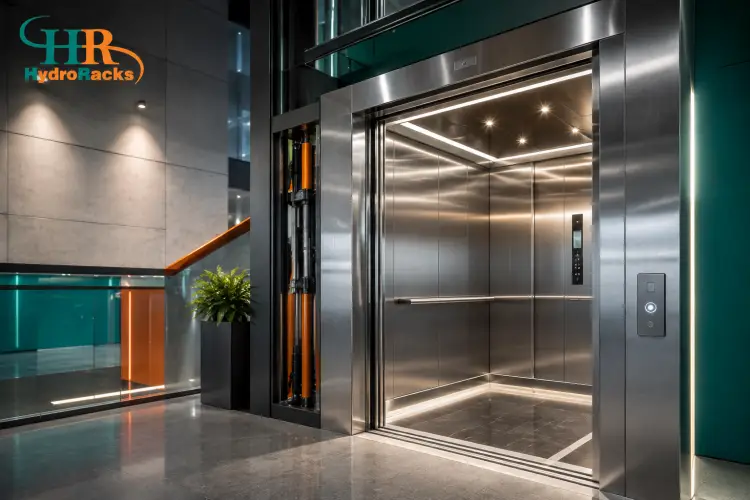
Hydraulic elevators can be engineered to fit almost any floor plan, making them ideal for private villas with restricted spaces. The table below outlines standard shaft and cabin dimensions:
|
Passenger Capacity |
Rated Load Capacity |
Cabin Dimensions (W x D) |
Shaft Dimensions (W x D) |
|
2 Passengers |
200 – 250 kg |
800 x 900 mm |
1,100 x 1,200 mm |
|
3 to 4 Passengers |
300 – 400 kg |
900 x 1,200 mm |
1,300 x 1,400 mm |
|
5 to 6 Passengers |
450 – 600 kg |
1,100 x 1,400 mm |
1,500 x 1,600 mm |
(Note: Actual civil dimensions may vary based on door selection, wall materials, and specific structural requirements.)
When investing in vertical transportation, choosing a specialized manufacturer ensures you secure the optimal hydraulic elevator cost while guaranteeing safety and component reliability. Hydro-Racks (Taiba Company) is a recognized market leader in supplying, engineering, and maintaining custom hydraulic lifts for private, commercial, and industrial clients across Egypt.
|
Service Advantage |
Value Delivered to Building Owners |
|
Custom Engineering |
Custom-built lifts designed for narrow shafts, low overheads, and shallow pits. |
|
Competitive Pricing |
Direct factory pricing without intermediary markups, ensuring true value for money. |
|
European Quality Standards |
Integration of high-grade valves, certified cylinders, and advanced control electronics. |
|
Complete After-Sales Care |
24/7 technical support, routine maintenance, and genuine replacement parts. |
Tailored Engineering Solutions: Hydro Racks specializes in non-standard elevator shafts, offering shallow-pit and machine-room-less (MRL) configurations that preserve your building's architectural integrity.
Transparent Pricing Models: By sourcing certified European components and manufacturing precision assemblies locally, Hydro-Racks provides competitive market quotations with complete price transparency.
Comprehensive Warranty & Maintenance: Every installation is backed by scheduled preventive maintenance programs, genuine replacement parts, and dedicated emergency repair services to ensure 24/7 uptime.
No, modern hydraulic models engineered by Hydro-Racks can operate with a shallow pit of just 10 to 15 cm, or even zero pit using a small access ramp, making them perfect for existing villas.
With regular preventive maintenance, fluid checks, and seal replacements, a high-quality hydraulic lift has a service lifespan of 20 to 25 years or more.
Hydraulic systems feature an automatic gravity descent mechanism. In a power outage, the emergency lowering valve opens via battery power, bringing the cabin safely to the ground floor and opening the doors automatically.
Yes, for low-rise buildings up to 4 or 5 floors, the overall hydraulic elevator cost—including purchase, installation, and civil prep work—is generally more economical than traction systems.
Selecting the right vertical transportation system involves balancing technical performance, safety features, and overall investment return. Contact the engineering team at Hydro-Racks today to request a free site inspection, receive expert technical guidance, and get an accurate quote tailored to your project.