
- مجمع عيادات شارع (9) - الهضبة العليا - المقطم - القاهرة
- +201099885538

Here is the revised article, expanded and structured to approximately 1,300 words. The keyword hand pallet truck (along with its variations and related internal links from Hydro Racks) has been seamlessly integrated into the text to enhance SEO value while maintaining natural readability and professional flow:
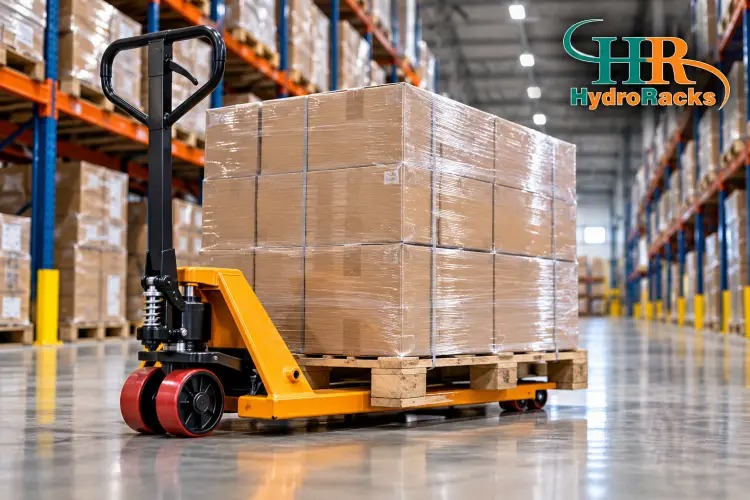
Goods handling equipment is one of the essential elements that ensures the efficiency and smoothness of work inside warehouses and factories, while maintaining high levels of safety. Among various material handling solutions, the manual forklift—often referred to as a hand pallet truck—stands out as one of the most widely used systems, thanks to its ease of operation, efficiency in moving and lifting loads, and its economical cost compared to heavy equipment.
In this comprehensive guide from Taiba Company (Hydro Racks), we review everything you need to know about these systems, from their types and uses to the most important criteria that help you choose the most suitable model for
Despite their importance in handling operations, many factories, warehouses, and storage facilities rely heavily on a dependable hand pallet truck for lifting, transporting, and organizing goods. They feature a robust frame and a mechanical design optimized for stability during lifting. These essential tools offer a range of critical applications, including:
Manual forklifts and standard units are used in factories, warehouses, and various logistics activities that require moving, lifting, and arranging goods. They possess several unique advantages, most notably:
Manual material handling units vary in type according to load weight, storage height, and intended use within a warehouse. They can be broadly divided into two main categories:
This type relies on a manually operated hydraulic lifting system, where the operator pumps the lever to raise the forks and load to the required height.
Suitable for: Light to medium loads, horizontal transport, and loading/unloading work that does not require continuous heavy motor operation throughout the day.
To learn more about the technical specifications, load capacities, and available lifting systems, please refer to our expert guide. Manual Clark prices
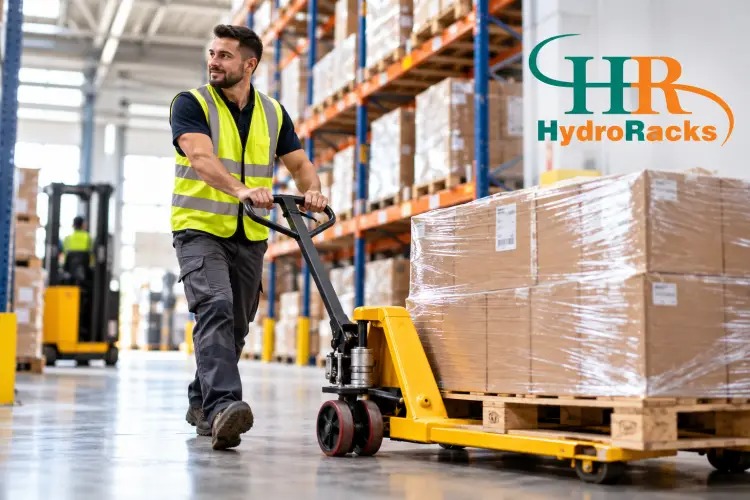
This version combines the ease of manual steering with an electric lifting system. It uses an integrated motor and battery to lift loads at the push of a button, while the operator manually guides the equipment.
Most suitable use: A motorized or semi-electric hand pallet truck is a practical option for repetitive handling work, especially when lifting loads to great heights or operating for long periods, as the electric lift reduces physical operator fatigue
For more details on operation, battery types, and technical features, please refer to Hydro racks On our expert guide about Clark electric handheld.
|
Comparison point |
Manual hydraulic unit / Hand pallet truck |
Semi-electric manual forklift |
|
Lifting mechanism |
Manually operated hydraulic system |
Battery-powered electric motor |
|
Guidance |
Manual pulling/pushing |
Manual steering with electric lift |
|
Human effort |
Medium to high |
Very low |
|
Lifting height |
Approximately 1.6 to 3 meters |
Approximately 3.5 to 4.5 meters |
|
Load capacity |
From 1 to 2 tons |
From 1 to 2 tons |
|
Initial cost |
Low and economical |
Medium |
In general, a standard hydraulic hand pallet truck is ideal for simple, intermittent work requiring an economical solution, while electric-lift variants excel in environments demanding frequent, high-reach operations. For a deeper dive into equipment selection, read our guide
Before purchasing a manual forklift or a specialized hand pallet truck, evaluate your facility's operational profile to ensure you select equipment matching your exact load capacities, dimensions, and performance targets:
The Tayba team helps you determine the appropriate loading capacity, lifting height, and dimensions for your warehouse and operational needs. Contact us via WhatsApp for a free consultation and to select the right equipment for your project. You can also inquire about...Hand Pallet
Prices for any manual forklift or hand pallet truck vary based on technical specifications and manufacturing components. Key price-influencing factors include:
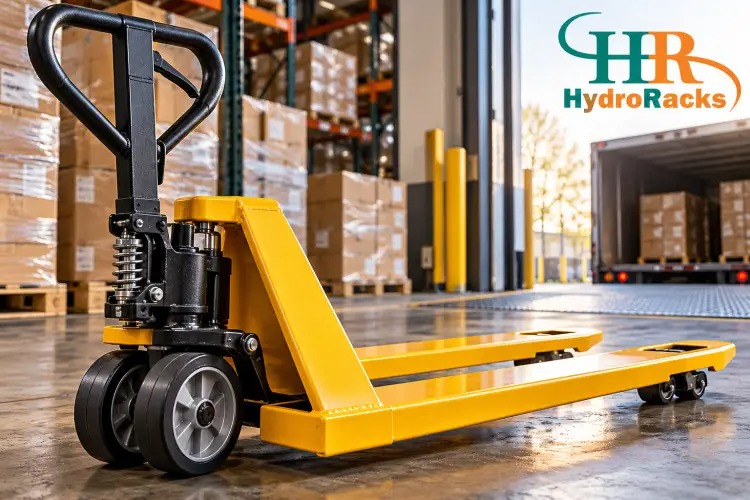
To maintain the operational efficiency of your hand pallet truck and prevent sudden downtime, follow these routine inspection and maintenance guidelines:
Choosing the right material handling tool is essential for boosting warehouse efficiency, saving time, and protecting personnel. Whether you need a simple hydraulic hand pallet truck for daily horizontal movement or an advanced stacker for high-tier racking, Taiba Company offers diverse, certified solutions tailored to your facility.
For assistance in determining the appropriate load capacity, lifting height, and specifications, you can also contact the Taiba team for technical advice .Manual Electric Forklift And choose the right solution for your project.
We always recommend contacting Tayba Hydro Racks through their website to get the latest prices and special offers, as our team has extensive experience in the field of hydraulic racks and Warehouse Racking System Clarkat is pleased to offer the best solutions to meet your needs and budget, and we are committed to providing excellent pre- and post-sales services to ensure your complete satisfaction
Standard units typically feature a lifting capacity between 1 and 2 tons, depending on the specific model. Always adhere strictly to the manufacturer's rated load limits for safety.
A traditional hand pallet truck is primarily used to move pallets horizontally while raising them just high enough to clear the ground, whereas a stacker features a vertical mast allowing goods to be elevated onto multi-level storage racks.
No, manual handling equipment does not typically require an official driving license, but operators must be properly trained in safety protocols, correct loading techniques, and stability guidelines before use.