Foam Fire Extinguishing System: Types, Benefits and Safe Use
date :
2026-08-31
The direct foam fire extinguishing system is considered one of the most effective solutions for protection against flammable liquid fires (Class B). It works to detect the fire and deal with it quickly before it causes the fire to spread. Tiba Company (hydro racks) offers specialized solutions in direct foam fire extinguishing systems by designing and installing systems that rely on heat-sensing tubes that discharge foam directly onto the fire source. The foam works to cool the surface, isolate oxygen, and help extinguish the flames efficiently, thereby providing a higher level of safety and protection for facilities and equipment.
How Does the Foam Fire Extinguishing System Work?
The Foam fire extinguishing system relies on a set of integrated mechanisms that work together to control and quickly extinguish a fire, especially in Class B flammable liquid fires. The main working mechanisms of the system are as follows:
- Smothering (Isolating): Preventing Oxygen Access The foam spreads over the surface of the burning liquid to form an insulating layer that separates the fuel from the air. This limits oxygen access, reduces the emission of flammable vapors, and consequently helps stop the fire from continuing.
- Cooling: Lowering the Temperature The foam contains a percentage of water that absorbs heat from the fuel surface and the areas surrounding the fire. This helps lower the temperature to levels that reduce the likelihood of continued ignition or reignition.
- Vapor Control and Flame Suppression The foam layer covers the liquid surface and reduces the emission of flammable vapors, which are essential factors in sustaining liquid fires. The efficiency of this mechanism varies depending on the type and composition of the foam used, such as AFFF, and the nature of the liquid being protected.
By combining isolation, cooling, and vapor control, this system provides effective and rapid protection for facilities and areas containing flammable liquids. If you are looking for the Best foam fire extinguishing system, understanding these core mechanisms is crucial.
If you are looking for more information about Kitchen hood, explore this article to discover more details and solutions.
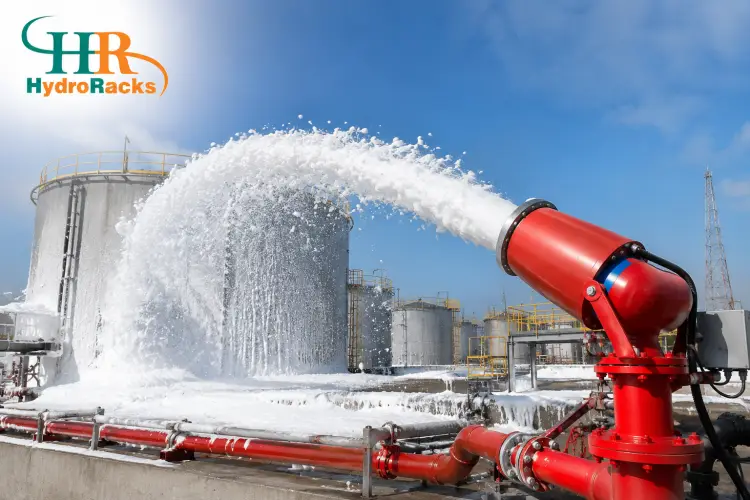
Essential Components of a Fixed Foam Fire Extinguishing System
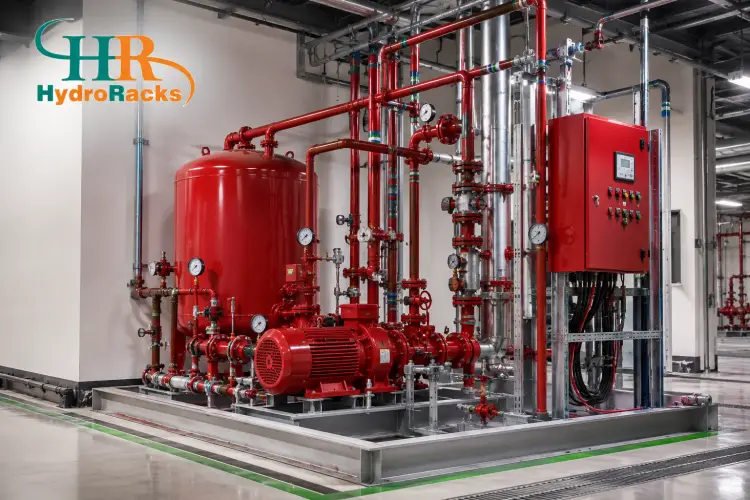
A fixed system consists of an integrated set of components that work together to ensure rapid fire detection and discharge of foam at the appropriate concentration to control it. The main components include:
- Foam Tank: Used to store Foam Concentrate. Various types are available, such as Bladder Tanks and Atmospheric Tanks, manufactured from corrosion-resistant materials to maintain the foam's properties.
- Proportioners (Mixing Devices): Proportioners mix the foam concentrate with water at specific ratios according to the type of foam and the protection system requirements. Common ratios are 1%, 3%, and 6%. Adjusting the ratio accurately helps produce a foam suitable for the nature of the fire and the protected area.
- Pipe Network and Discharge Nozzles: The pipe network transports the foam solution to the discharge points, which may include Foam Chambers or Foam Nozzles. This equipment distributes the foam over the targeted area to cover the fuel surface and limit fire spread.
- Control Panel and Alarm Devices: The control panel links the detection devices and the various system components. Upon detecting a fire, it can activate extinguishing procedures such as starting fire pumps, opening valves, and triggering audio-visual alarms, according to the system design and approved sequence of operations.
Types of Foam Concentrates and Their Applications
The types of concentrates in a Foam fire extinguishing system vary according to their chemical composition and the type of fuel or flammable materials on site. Therefore, the appropriate foam type is selected based on the nature of the hazard and the requirements of the system. The most prominent types include:
- AFFF Foam: For Hydrocarbon Liquid Fires Aqueous Film Forming Foam (AFFF) is used to combat fires involving fuels, oils, and Class B hydrocarbon liquids. It forms an aqueous film over the fuel surface that helps isolate vapors and reduce oxygen access, contributing to rapid fire control.
- AR-AFFF Foam: For Water-Soluble Liquids Alcohol-Resistant AFFF (AR-AFFF) is designed to deal with fires involving polar, water-soluble liquids like alcohol, ethanol, and certain solvents. It contains components that form a protective barrier over the fuel surface, maintaining the stability of the foam layer and preventing reignition.
- Protein and Synthetic Foam Protein foam forms a cohesive layer that withstands high temperatures, making it suitable for certain applications protecting fuel tanks and petroleum facilities. Synthetic foam features versatile expansion options and can be used in various applications depending on the system type and design, including certain spaces, warehouses, and industrial facilities.
- F3 Foam: A Fluorine-Free Option Fluorine-Free Foam (F3) is a foam concentrate devoid of fluorine compounds, developed as an alternative to types containing PFAS materials. It is used in an increasing number of fire protection applications, taking into account performance requirements, standards, and applicable environmental regulations.
Selecting the appropriate concentrate is a fundamental step in designing the system, as it depends on the fuel type, facility nature, application method, and approved foam concentration.
Learn more about fire sprinkler system and the key solutions used to improve fire protection systems.
Major Applications and Uses of the Foam Fire Extinguishing System
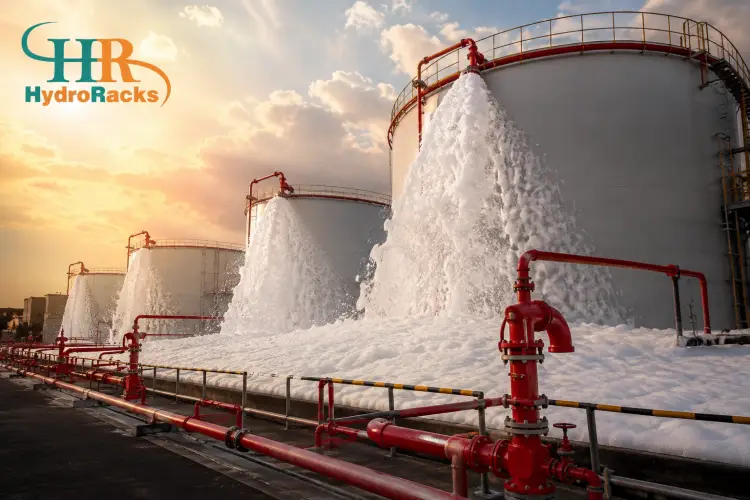
These systems are highly effective solutions for protecting facilities handling petroleum products and flammable liquids, especially in environments where Class B liquid fires present a high risk. Prominent applications include:
- Petroleum Refineries and Fuel Depots: Refineries, oil storage tanks, and fuel storage and distribution stations use this system to control flammable liquid fires. The foam covers the fuel surface, restricts vapor spread, and reduces the likelihood of the fire extending to adjacent areas and tanks.
- Chemical Warehouses and Facilities: Facilities storing solvents, alcohols, and certain chemical liquids require selecting the appropriate foam type for the stored materials. Alcohol-Resistant (AR) foam can be used in suitable applications for polar liquids, subject to risk assessment and system design.
- Aircraft Hangars: Aircraft hangars are exposed to the risk of aviation fuel fires. Therefore, foam extinguishing systems can be designed to protect hangar spaces, aircraft, and internal equipment. The foam type and application method, such as spraying or high-expansion foam, vary depending on the facility design and protection requirements.
- Fuel Stations and Oil Shipping Ports: These systems are utilized in fuel loading and unloading areas, filling stations, and petroleum product handling facilities, alongside Foam Monitors and fixed systems, to provide a rapid response in the event of a leak or ignition of flammable liquids.
Choosing the right system depends on the type of flammable material, the nature of the facility, the hazard area size, and the foam application method, ensuring the required level of protection is achieved.
Maintenance of Foam Systems and Safety Standards (NFPA)
Fire suppression setups are subject to precise technical standards to ensure the efficiency of their design, installation, and maintenance. The standards of the National Fire Protection Association (NFPA) are among the most important references in this field. A prominent standard related to foam systems is NFPA 11, which covers low-, medium-, and high-expansion foam systems, specifying requirements for design, installation, application rates, and selecting the appropriate foam concentrate.
Periodic inspections and tests must also be conducted according to the approved standard and system design, generally including:
- Foam Tank: Ensuring there are no leaks, and inspecting the foam concentrate level and the condition of the tank and its components.
- Valves and Pressure Gauges: Ensuring correct valve positioning, intact connections, and reviewing pressure readings.
- Pumps and Proportioners: Testing operation and verifying the efficiency of mixing devices and concentration ratios according to system specifications.
- Foam Concentrate: Inspecting its properties and conducting necessary periodic tests through a qualified entity or laboratory, based on the foam type and standard requirements.
- Pipe Network and Discharge Nozzles: Verifying the absence of blockages and conducting necessary flow tests.
- Control and Alarm Panel: Ensuring the integrity of signals and connections between detection devices, valves, and extinguishing components.
Testing and maintenance work must be executed by qualified technicians and entities in accordance with the approved standard edition and the requirements of the competent authority, as the frequency and requirements of tests may vary based on the system type and its application. To determine the Foam fire extinguishing system price including maintenance contracts, contact hydro racks.
Note: Some older references pointed to NFPA 16 for foam-water sprinkler systems; however, this standard was withdrawn, and its requirements were merged into NFPA 11 in newer editions. Therefore, it is recommended to refer to the currently approved edition when designing or maintaining the system.
For more details about fire fighting system company and its applications, read this article to explore suitable fire protection solutions.
Frequently Asked Questions
Can a foam fire extinguishing system be used for electrical fires?
No, a Foam fire extinguishing system is generally not used for electrical fires while equipment remains energized, due to the foam containing water and the resulting electrical hazards. Instead, systems suitable for electrical equipment, such as CO₂, clean agents, or dry powder, are utilized according to the nature of the equipment and protection requirements.
What is the difference between a fixed system and a manual foam extinguisher?
The difference is that a fixed Foam fire extinguishing system covers large areas and facilities and operates automatically or manually, whereas a portable foam extinguisher is intended for small fires in their initial stages, operates manually, and has a limited capacity.

