
- مجمع عيادات شارع (9) - الهضبة العليا - المقطم - القاهرة
- +201099885538

Nowadays, modern warehouse design is no longer limited to organizing shelves and providing storage spaces. Instead, it has become a fundamental driver of supply chain efficiency, operational excellence, and profitability. When setting up a new facility, business owners and logistics managers face multiple challenges—most notably optimizing space utilization, organizing the flow of goods and equipment, and reducing handling time while maintaining the highest safety standards.
A well-planned engineering layout directly reduces operational costs, minimizes product damage, and accelerates order fulfillment, ultimately strengthening business efficiency and market competitiveness.
In this article from Hydro Racks, we review the essential principles and steps for building an efficient operational structure that meets current business demands while remaining adaptable to future growth.
Advance engineering planning is a crucial first step to ensure storage efficiency and avoid costly, unnecessary modifications after operations begin. A facility functions as an integrated system encompassing receiving, storage, handling, and shipping—requiring a meticulous warehouse design approach that accounts for every operational phase.
Maximizing Storage Capacity: Distributing racking systems to fully exploit both horizontal space and vertical ceiling height. Incorporating innovative small warehouse design principles ensures even limited footprints achieve high density.
Aisle Layout Optimization: Determining precise aisle dimensions tailored to forklifts and material handling equipment to ensure smooth movement without wasting square footage.
HydroRacks provides professional forklift safety solutions that maximize storage capacity, improve workflow, and make better use of available space.
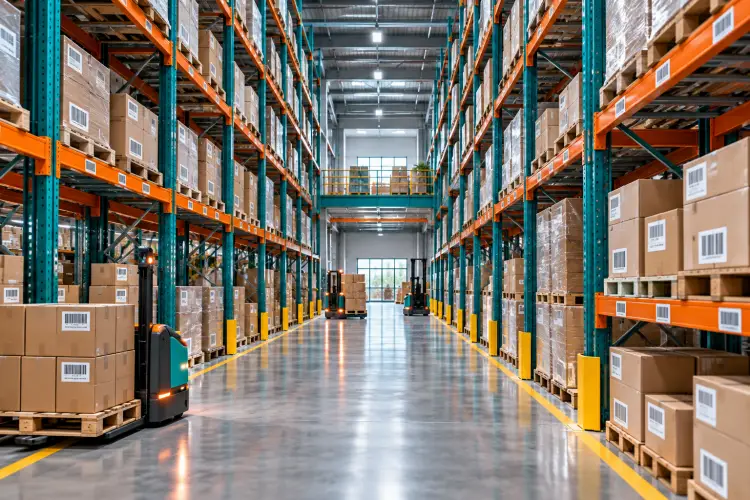
Reducing Handling Time: A core objective of proper planning is organizing receiving, storage, packing, and shipping zones to minimize travel distances.
Mitigating Congestion: Establishing clear, dedicated routes for workers and equipment to prevent bottlenecks during peak operational hours.
Avoiding Future Retrofits: Thorough initial planning minimizes the costs associated with reconfiguring racks or altering infrastructure post-launch.
Preventing Product Damage: Incorporating proper ventilation, cooling, and environmental protection based on the specific nature of the inventory.
A robust plan designates emergency exits, fire suppression systems, and evacuation routes. It also provisions safe clearances for forklift operations and structural protections to guard racks from collisions.
Early structural planning allows for future capacity expansion or racking modifications. It also simplifies the integration of automated systems, conveyor belts, and robotics as operational needs scale.
Engineered planning evaluates floor load-bearing capacity to accommodate heavy inventory, racking, and machinery. It also ensures appropriate layouts for lighting, HVAC, and electrical infrastructure tailored to the facility's profile.
Determining aisle width and racking clearance is a cornerstone of effective spatial planning, heavily influenced by the types of forklifts and handling equipment deployed. Proper spatial distribution ensures seamless maneuverability, speeds up loading/unloading operations, and reduces collision risks.
Wide Aisles (3.5m – 4.2m): Suitable for standard forklifts, offering maximum maneuverability but consuming more floor space.
Narrow Aisles (2.7m – 3.0m): Designed for reach trucks, offering a balanced trade-off between mobility and space efficiency.
Very Narrow Aisles (VNA) (1.5m – 1.8m): Used with specialized equipment like turret trucks, ideal for facilities requiring maximum storage density.
Effective safety in warehouses helps businesses organize storage systems, improve accessibility, and increase overall operational efficiency.

When calculating aisle widths, operators must account for turning radius, fork length, pallet depth, and safety clearances—rather than relying solely on forklift dimensions. Maintaining safety margins between equipment and racking drastically cuts down accident rates.
Additionally, vertical clearances must be maintained between the top storage level/equipment mast and fire sprinklers or lighting fixtures.
Main Corridors: Connect receiving, storage, processing, and shipping areas. These must be wide enough to support two-way material handling traffic safely.
Pedestrian Walkways: Worker movement should be physically separated from forklift lanes using clearly marked lines or safety barriers.
Turning Radii: Adequate space must be allocated at the ends of aisles to allow forklifts to turn and transition smoothly between zones.
Note: Dimensions listed above serve as general guidance. Final aisle measurements must comply with equipment manufacturer specifications, local building codes, and safety regulations.
Hydro Racks provides diverse storage and material handling solutions. Choosing the right system depends on product specifications, weights, dimensions, available facility volume, and preferred handling methods.
Ideal for facilities storing heavy palletized goods with high SKU diversity. It provides immediate, direct access to every pallet and supports high load capacities.
Designed for manual hand-loading of spare parts, cartons, and medium-to-light items. Features easy assembly and adjustable shelf levels to suit evolving storage needs.
Engineered for high-density storage, particularly for large quantities of homogenous SKUs. Forklifts drive directly into the racking lanes, maximizing deep-space storage efficiency.
The optimal choice for storing long, bulky, or irregularly shaped materials such as pipes, tubing, timber, steel beams, and carpet rolls. The open-front design allows easy loading and unloading.
A practical structural solution for facilities with high ceilings and limited floor space. Mezzanine systems add extra storage or operational levels within the existing footprint without requiring concrete construction extensions.
With these versatile options, Hydro Racks delivers tailored storage solutions aligned with your inventory type, operational workflows, and spatial limits.
Our warehouse racks solutions focus on smart space planning, efficient racking layouts, and safer movement throughout the storage facility.
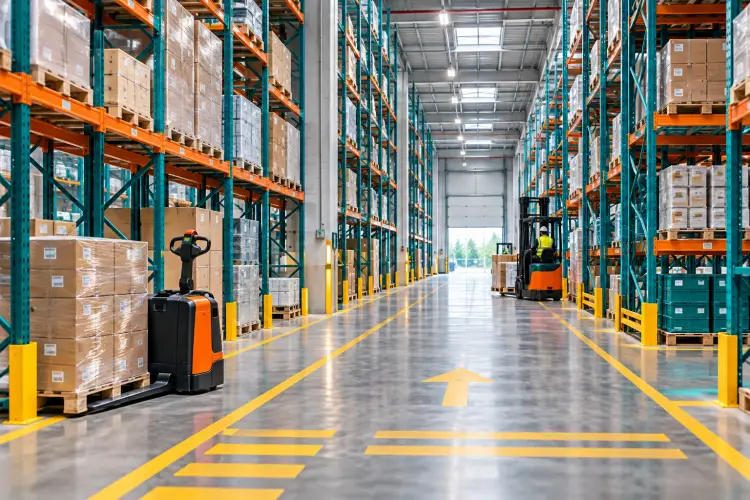
To build an efficient facility, planning must cover both structural aesthetics and functional internal workflows.
An optimized warehouse design exterior focuses on site accessibility, durable loading docks, clear truck turning radii, secure perimeter fencing, and efficient rainwater drainage. Ensuring smooth traffic flow outside the facility prevents bottlenecks at dock doors and guarantees safe staging for transport vehicles.
A well-executed warehouse design interior prioritizes logical zoning, durable high-load concrete flooring, energy-efficient LED lighting, and streamlined pathways. Balancing interior storage density with safe movement corridors keeps daily operations running at peak performance.
Implementing modern warehouse design ideas can significantly boost operational speed and throughput:
Efficient operational execution relies not only on racking and equipment, but also on a complete infrastructure and integrated protection system that safeguards personnel and inventory against fire hazards and operational disruptions.
Storage facilities demand precise fire protection engineering to guarantee adequate water pressure and flow rates across all zones:
Office areas, breakrooms, and kitchens inside the facility require tailored safety measures:
All safety and protection systems must be designed according to approved local codes and engineered by certified specialists.
Investing in professional engineering and smart warehouse design is a strategic move that elevates supply chain efficiency, enhances workflow, and boosts profitability. From preliminary layout organization and traffic management to selecting suitable racking systems, enforcing safety standards, and securing legal permits—every step contributes to a safer, more scalable logistics environment.
With Hydro Racks, you gain access to specialized expertise in engineering, manufacturing, and installing advanced storage solutions—transforming your facility into an organized, safe, and efficient asset equipped to support your long-term business growth.