
- مجمع عيادات شارع (9) - الهضبة العليا - المقطم - القاهرة
- +201099885538

Many industrial facilities now rely heavily on forklifts to lift and transport heavy equipment and materials. Like any other industrial equipment, forklifts carry inherent risks if safety standards are not strictly followed.
Accidents resulting from improper forklift usage can cause severe injuries and substantial material damage. Therefore, adhering to proper safety protocols is essential to protect workers and maintain a secure working environment. Above all, operators must be fully trained and certified. This article covers essential safety guidelines for forklift operation, highlighting the standards advocated by Hydro Racks.
Hydraulic forklifts are among the most critical material handling equipment used to lift and transport heavy loads. They rely on a hydraulic system that supplies the necessary power to lift loads to varying heights. They are widely used in warehouses, storage facilities, and shipping areas due to their efficiency and ease of maneuverability.
The working principle of a hydraulic forklift involves pumping hydraulic fluid into cylinders, generating the pressure required to move the lifting arms. This mechanism provides high capacity for handling heavy weights effectively. Additionally, hydraulic forklifts offer precise control over movement and direction, making them ideal for tight spaces and narrow aisles.
However, equipment efficiency never eliminates the need for strict operational precautions. Daily checks on wheels, brakes, and components before starting work are crucial to minimize accident risks and protect both workers and assets. To maintain top standards in your facility, adopting 10 rules for forklift safety is a great way to ensure daily operational hazards are minimized.
We provide a complete range of forklift designed to protect workers and reduce workplace risks.
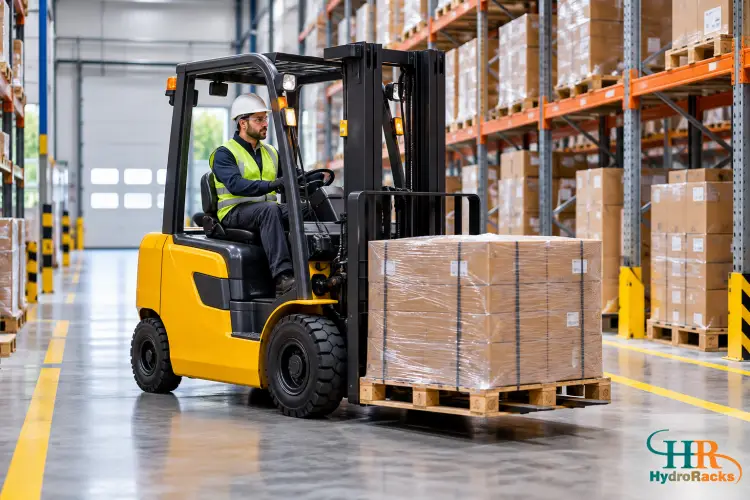
Forklifts can pose significant hazards to workers when operated incorrectly or without strict adherence to safety guidelines, as reflected in factory and warehouse accident statistics.
To emphasize the importance of proper training and safety compliance, here are 5 key forklift accident statistics referenced by the U.S. Occupational Safety and Health Administration (OSHA):
Forklifts require rigorous safety protocols due to their weight, design, and movement characteristics. Key risk factors include:
A forklift is a powered industrial truck used to lift, move, and stack heavy materials that cannot be handled manually. Named after its fork-like prongs, the modern forklift evolved around 1960 through innovations by companies like Clark.
Since then, forklifts have become essential components in manufacturing and warehousing. They are available in battery-electric versions as well as internal combustion engine models.
Rear-wheel steering enhances maneuverability in tight corners. However, prior to operating these machines, strict forklift safety procedures must be followed. Load capacities typically range from 1 to 5 tons for standard models, while heavy-duty industrial models can handle up to 50 tons.
Obtaining a forklift operator license is a primary requirement for safe operation, ensuring drivers are thoroughly trained in handling rules and hazard prevention.
Our hand pallet truck are selected to meet the needs of factories, companies, and industrial work environments.
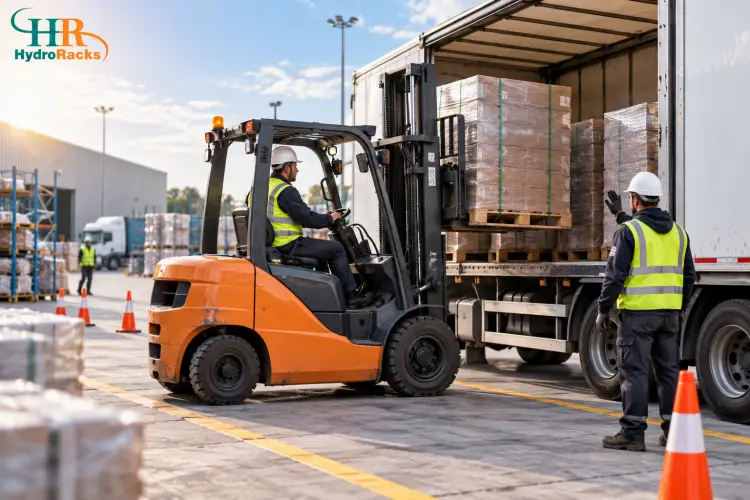
Implementing comprehensive forklift safety protocols is vital for safeguarding workers and facility assets during daily operations. Essential rules are categorized below:
Operators must wear the required safety gear before operating a forklift:
Choosing reliable Manual electric forklift helps improve workplace protection and operational safety.
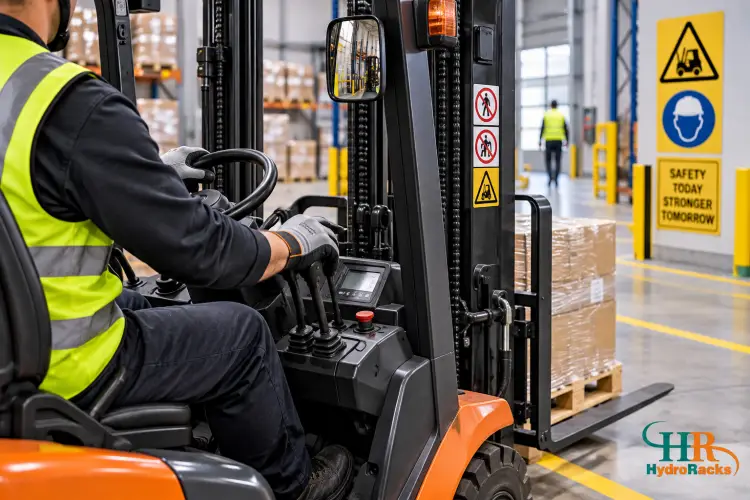
Regular maintenance and routine inspections ensure operational efficiency and prevent equipment failure.
|
Maintenance Frequency |
Key Inspection Tasks |
|
Daily (Pre-Shift) |
Check oil, coolant, fuel levels, brakes, tires, controls, horn/lights, hydraulic system, seatbelt, lift chains, and fire extinguisher. |
|
Weekly |
Clean the unit and engine bay, check tire pressure, lubricate moving parts and lifting chains. |
|
Monthly |
Inspect battery connections, check and replace air/oil filters as needed, adjust brake responsiveness. |
|
Every 3–6 Months |
Change engine oil and filters, inspect hydraulic cylinders and valves, test safety devices, and verify load balance. |
Manual forklifts offer an economical alternative for light-duty warehouse operations. Prices vary depending on weight capacity, lift height, and build quality.
|
Equipment Type |
Approximate Capacity |
Primary Application |
|
Manual Pallet Jack |
2.5–3 Tons |
Transporting palletized goods short distances |
|
Hand Stacker |
1–2 Tons |
Lifting and stacking goods onto low racking |
|
Digital Scale Pallet Jack |
2 Tons |
Weighing and transporting goods simultaneously |
|
Stainless Steel Jack |
2–2.5 Tons |
Food, pharmaceutical, and high-moisture environments |
Specific quotes depend on technical specifications and operational requirements. At Hydro Racks, a wide selection of forklifts and material handling solutions is available to meet warehouse requirements, backed by comprehensive maintenance and after-sales support.
Core forklift safety measures include adhering to speed limits, keeping clear of emergency exits, slowing down at turns, sounding the horn at blind intersections, and performing pre-operational checks.
Forklift weight varies by model and capacity, but average medium-duty forklifts weigh between 3.5 and 7.5 tons (7,000 to 15,000 lbs).
Yes. Daily pre-shift inspections are required to verify brake performance, tire condition, hydraulic integrity, and to ensure there are no fluid leaks or mechanical faults.
A manual pallet jack relies on human power and a basic hydraulic hand pump for short transfers, whereas a powered hydraulic forklift uses an engine or battery motor to lift heavier loads to much higher elevations.
Safe operating speeds depend on facility rules and floor conditions, but inside warehouses, speeds should generally remain under 10–15 km/h (and never exceed 20 km/h), slowing down significantly on wet surfaces or in tight aisles